Everything you cook with stock is only as good as the stock itself
Most home cooks skip making stock entirely, or reach for a cube, and that’s a perfectly reasonable shortcut most of the time. But once you’ve made your own, you’ll understand why restaurant food tastes the way it does. Good stock is built from bones you’d otherwise throw away, costs almost nothing, and makes soups, sauces, and braises taste like they took real effort. The method isn’t complicated, but a few small decisions make the difference between something rich and flavourful and something thin and grey.
Start cold. Everything else follows from there.
What bones to use
A roast chicken carcass, the frame left over after carving, is the most obvious starting point. It works well. But if you want better body and more flavour, raw bones are even better, because they have more collagen that hasn’t already been cooked out. Most butchers sell raw chicken backs and necks cheaply, and some supermarkets stock them too. It’s worth asking.
The most practical approach is to freeze bones as you accumulate them over a few weeks. A bag of two or three carcasses produces a much more concentrated, flavourful stock than a single bird, and it means you’re making something from scraps that would otherwise be binned.
What goes in the pot
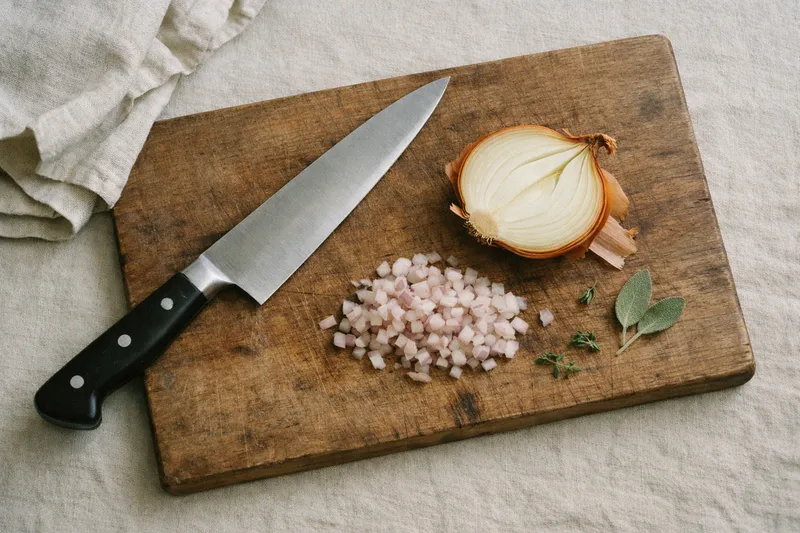
Onion, carrot, and celery are the standard base, roughly chopped, no need to peel anything. Add a bay leaf, a small handful of parsley stalks if you have them, and a teaspoon of black peppercorns. That’s it. Don’t add salt at this stage; stock reduces as it cooks, and you season the dish you’re making with the stock, not the stock itself. Keep the vegetables modest too. Too much carrot will make it taste sweet in a way that limits how you can use it.
Start in cold water and bring it up slowly
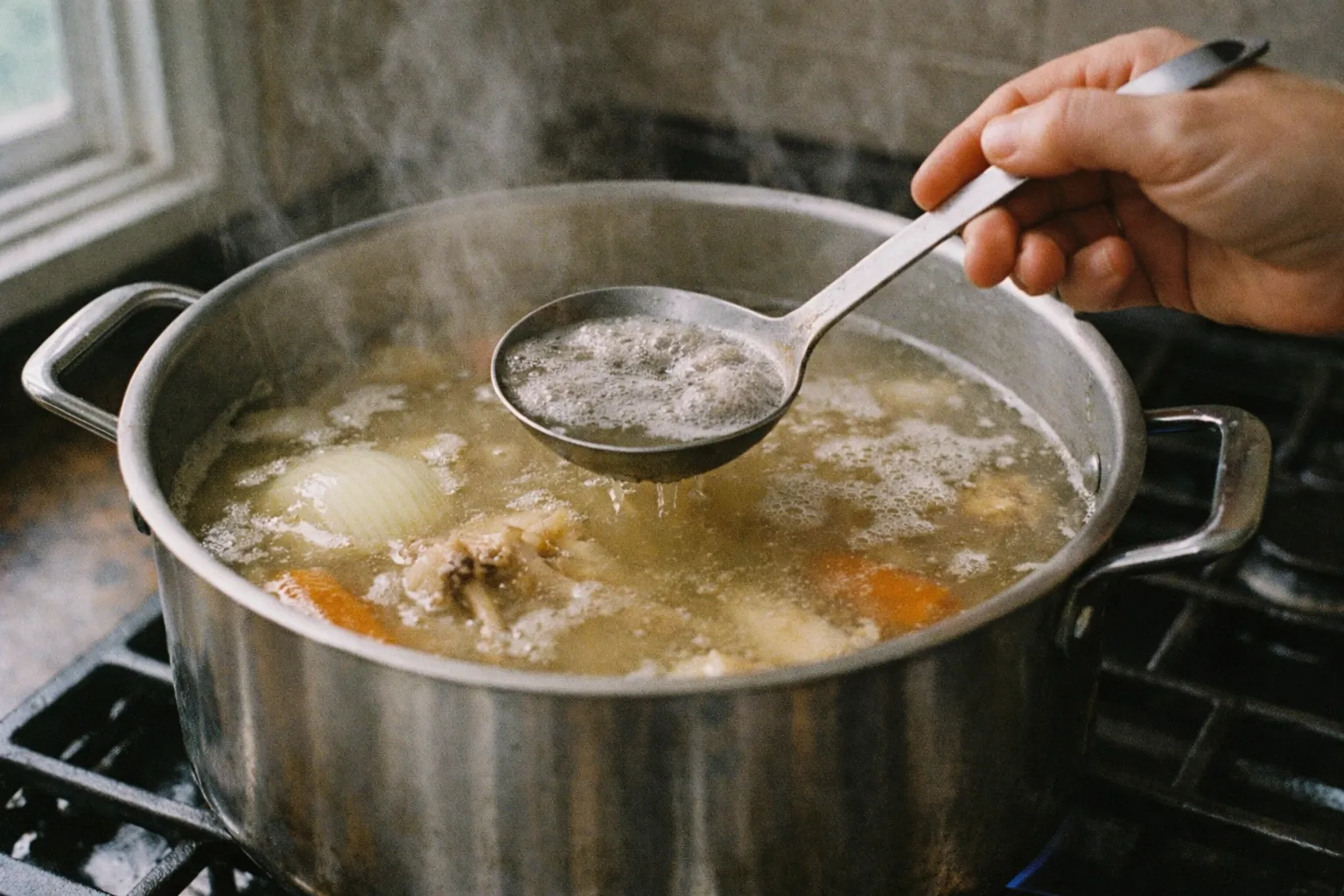
Cover the bones with cold water by about five centimetres. Cold water draws out the proteins gradually, which is what keeps the stock clear rather than murky. Bring it to a gentle simmer over medium heat. This takes 20 to 30 minutes. As the temperature climbs, grey foam will rise to the surface. Skim it off with a ladle or spoon; it won’t do any harm if you leave it, but removing it gives you a cleaner result.
Never let it boil
This is the most common mistake. A rolling boil turns stock cloudy and breaks down the fat into the liquid in a way that dulls the flavour. What you want is a bare simmer, small bubbles breaking the surface every few seconds, not a vigorous roll. Keep the heat low and check it occasionally. Three hours is enough for chicken stock. You don’t need to watch it constantly; check every 30 minutes or so and top up with hot water if the bones start to show above the surface.
Strain and cool it properly
Pour the stock through a fine sieve into a large bowl or pot and let it drain under its own weight. Don’t press the solids through, as this clouds the stock. Cool it as quickly as you can: set the bowl in a sink filled with cold water and stir it occasionally. Once it’s cooled to room temperature, put it in the fridge overnight. The fat will solidify on top and lift off in one clean piece. What’s underneath is your stock.
How to store it
Refrigerated, it keeps for about five days. In the freezer, three months. The most space-efficient method is to reduce the finished stock by half before freezing. You get a concentrated base that takes up half the space and dissolves straight into whatever you’re cooking. Freeze it flat in zip-lock bags and it stacks easily.
Once you have stock in the freezer, the quality of everything you cook with it shifts. That’s the return on a few hours of doing almost nothing.